The 2025 World Games, held from August 10 to 12 at the Jianyang Cultural and Sports Centre Gymnasium in Chengdu, China, showcased the dynamic and evolving sport of ju-jitsu. With 129 athletes from 37 nations competing across 19 events, the tournament highlighted both traditional techniques and innovative adaptations, including the debut of para ju-jitsu categories.
Historic Achievements in Para Ju-Jitsu / Inclusive Self Defence
A significant milestone was achieved when China secured its first-ever para ju-jitsu gold medal. Li Yucai and Guo Ao triumphed in the Mixed Duo Para Physical event, narrowly defeating Germany's Alessandro Schober and Christine Jahn with a score of 167–162. Li expressed that their four months of rigorous training together validated their perseverance and dedication to the sport
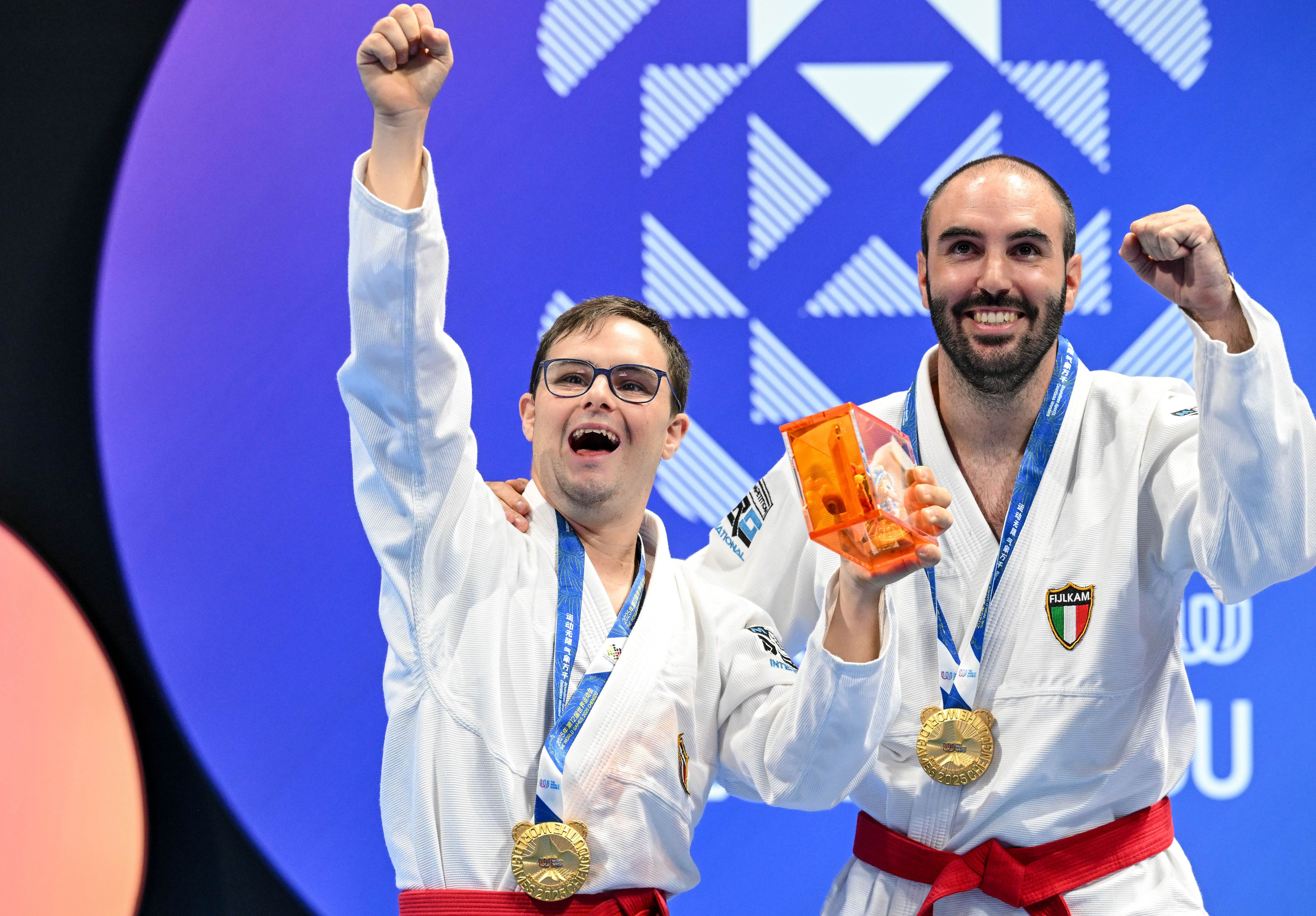
In other para ju-jitsu events, Germany's Nike Hunecke and Julia Paszkiewicz clinched gold in the Mixed Duo Para Visual category, edging out China's Wang Wenqiang and Pan Tianyou. Meanwhile, Italy's Giovanni and Pietro Napoli secured gold in the Mixed Duo Para Mental event, with Giovanni embracing his sibling with Down syndrome, Pietro, stating, "He's not different, just a little special. Carrying him to gold is my proudest achievement"
Dominant Performances in Jiu-Jitsu (Ne-Waza)
It has been The World Games 2013 in Cali when Jiu-Jitsu made the debut in the World Games with two weight categories. This discipline which is as well famous under the name Brazilian Jiu-Jitsu unites a huge community of enthusiasts including many celebrities.
Israel's Nimrod Ryeder emerged as a standout athlete, earning his second gold medal in the Men's Open Jiu-Jitsu category. He had previously secured the 77kg title, solidifying his reputation as a dominant force in the sport
Hungary's Tamara Toros made a remarkable impact by dethroning reigning champion Sung Ki-ra in the Women's 63kg semifinals, eventually claiming the women's open gold over Israel's Meshi Rosenfeld by submission
The United Arab Emirates (UAE) showcased their prowess with Saeed Al Kubaisi clinching gold in the under-85kg division, while Mehdi Al Awlaki and Mohammed Al Suwaidi secured silver medals in the under-77kg and under-69kg categories, respectively
Ju-Jitsu Fighting
Bohdan Mochulskyi of Ukraine secured his third consecutive World Games gold medal in the men's -62kg Fighting category. He defeated Ecco Van der Veer of the Netherlands with a score of 17–12, completing a title hat-trick following his triumphs in 2017 and 2022.
France's Estelle Gaspard dominated the women's -52kg Fighting division, clinching the gold medal with a series of impressive performances. Her victory added to France's growing reputation in the sport.
Denmark's Rebekka Dahl earned her third World Games medal, a silver, in the women's 57kg Fighting Ju-Jitsu category. She advanced to the final after defeating the Netherlands' Geneviève Bogers 20–18 in a closely contested semifinal. In the final, Dahl faced Germany's Sophie Busch, who secured the gold with an 18–6 victory. Following the match, Busch expressed her admiration for Dahl, stating, "It's just amazing because Rebekka Dahl has always been my model when I was young. I have never expected to defeat her in the final."
Team Thailand dominating the traditional Ju-Jitsu by securing both gold medals in the technical disciplines.
Let the Show begin
Show Ju-Jitsu is gaining popularity as entertaining format of competition combining stunt and acrobatic elements with the traditional Martial Art of Ju-Jitsu.
Thailand's Warut Netpong and Charatchai Kitpongsri clinched the gold medal in the Mixed Duo Show Open category, delivering a performance that captivated the audience and judges alike. Their victory underscored Thailand's growing prominence in the sport.
Duo – the traditional Ju-Jitsu
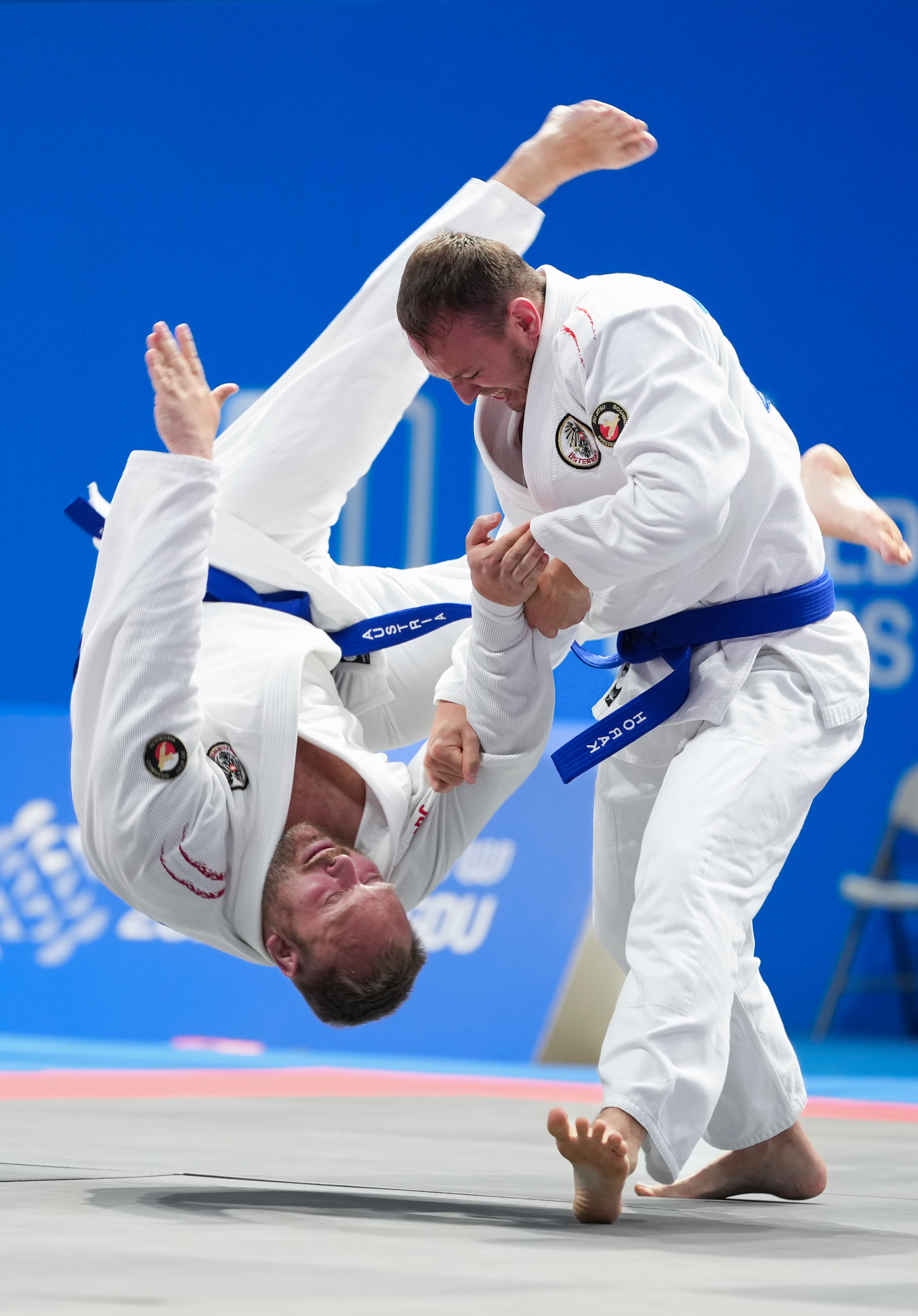
In the Mixed Duo Team Open event, Thailand continued its dominance, securing the gold medal. Austria followed closely, earning the silver, while Italy took home the bronze, highlighting the competitive nature of the event.
A Global Celebration of Ju-Jitsu
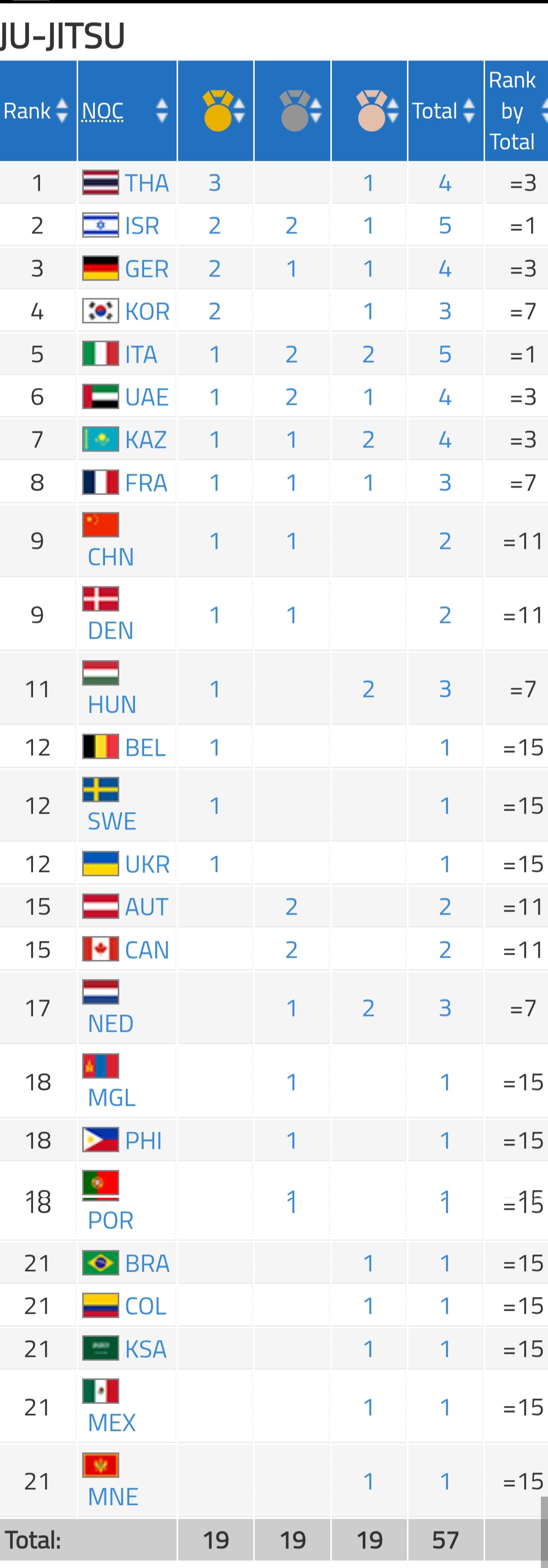
The 2025 World Games underscored ju-jitsu's universal appeal, with champions emerging from 14 diverse nations, including France, Korea, Kazakhstan, Belgium, and Denmark. Almost 70% of the participating nations could secure at least one medal. The inclusion of para ju-jitsu events marked a significant step towards inclusivity, reflecting the sport's commitment to embracing athletes of all abilities.
As the World Games concluded, the ju-jitsu community celebrated not only the athletic achievements but also the spirit of unity and resilience that the sport fosters worldwide.