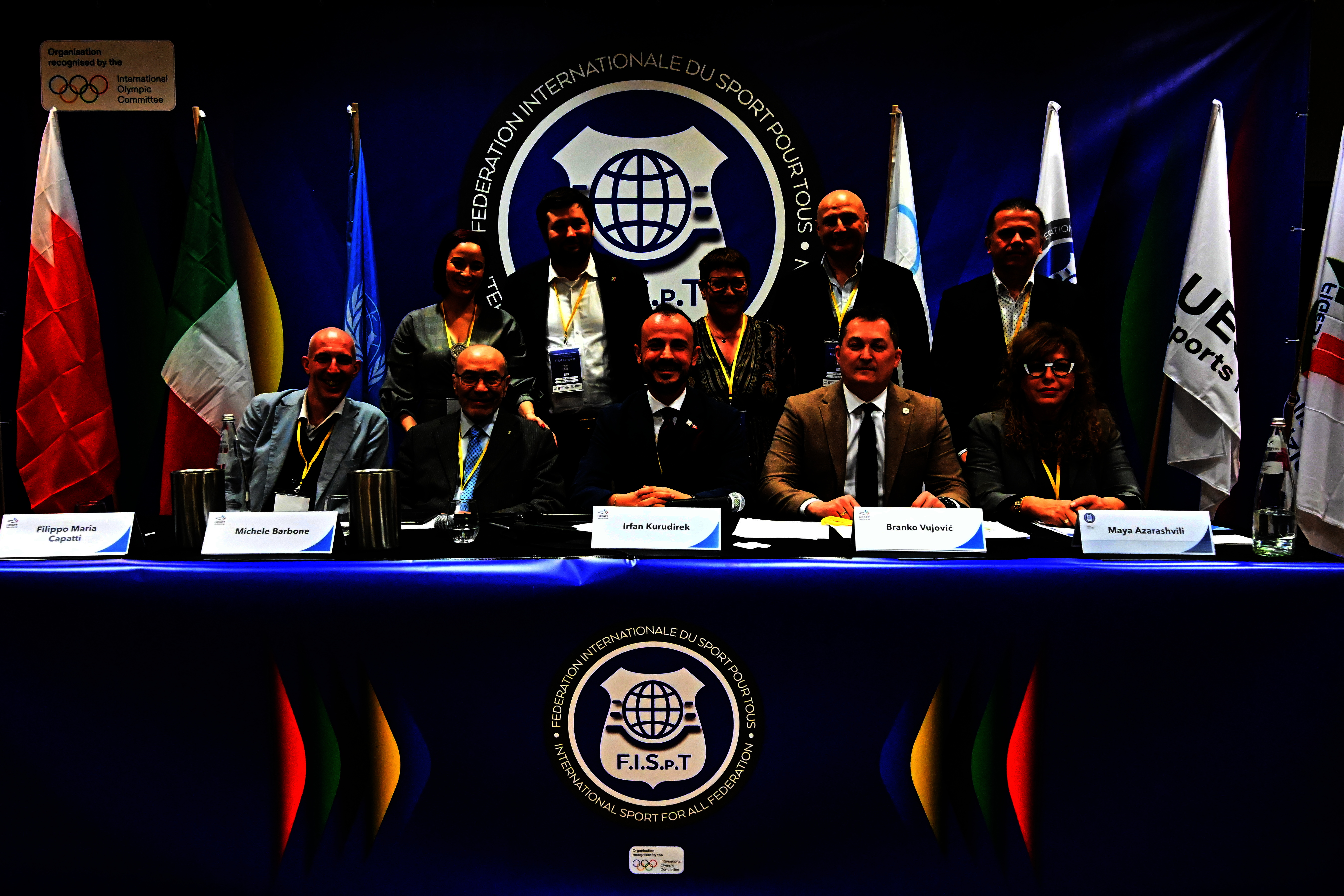
The International Sport for All Federation (FISpT) today announced the recognition of the Ju-Jitsu International Federation (JJIF) as a Committee Member within its global structure. This decision marks a significant step in the ongoing rebranding of our organisation and reinforces our commitment to promoting inclusive, diverse, and accessible sport disciplines under the Sport for All philosophy.
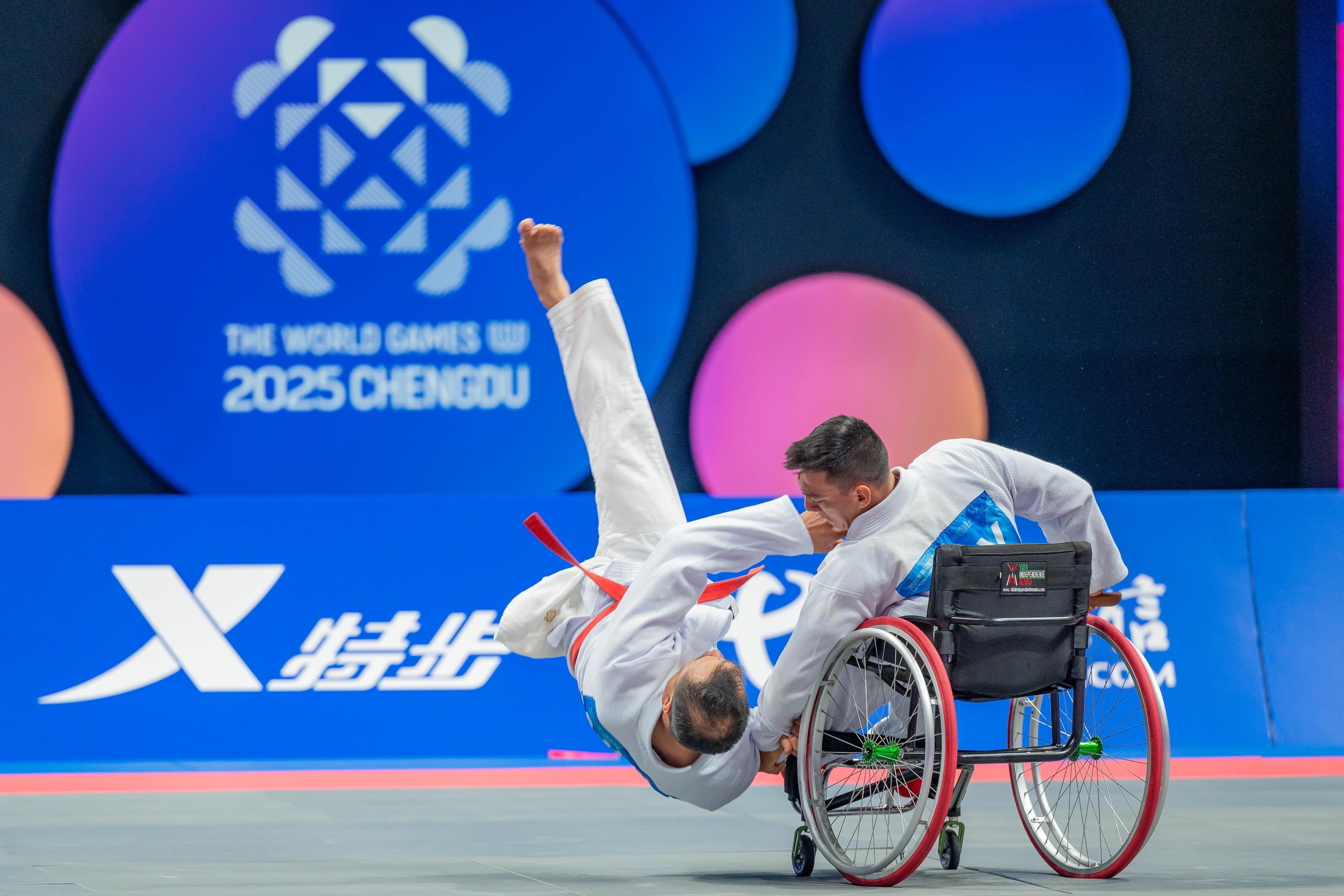
Ju-Jitsu, often referred to as the “gentle art” or “art of suppleness,” is a Japanese martial art developed as a close-combat system that enables a defender to neutralise an opponent without using weapons. Its name derives from the Japanese characters ju (gentle, flexible, yielding) and jutsu (art), reflecting the core principle of bending to an attack rather than resisting it with brute force. Today JJIF focuses on promoting Ju-Jitsu as THE FLEXIBLE ART. To react to all kinds of threats and crises in an appropriate and flexible manner. This approach is adding value to society. Providing solutions for all kinds of violence for different target groups. The practitioners traditionally use throws, holds, joint locks, choking techniques, and controlled strikes to redirect an opponent’s energy and bring them under control. Avoiding and preventing conflicts with communication and behavior based on the same philosophy are elements of today’s education.
Historically, Ju-Jitsu emerged among the samurai class in Japan from the 17th century onwards, designed to complement swordsmanship in situations where weapons were unavailable or impractical. Over time, different regional systems developed, each with its own technical emphasis, but all grounded in the same strategic concept: to overcome strength with technique, timing, and adaptability. In the modern era, Ju-Jitsu has evolved into a structured sport with international competition formats, while still preserving its traditional values of discipline, respect, and personal development.
The JJIF gained important institutional recognition in the early 1990s, becoming a member of the General Association of International Sports Federations (GAISF) in 1993 and of the International World Games Association (IWGA) in 1994. These milestones enabled Ju-Jitsu to participate in multi-sport events, including the World Games, first in 1997. In 1998, to strengthen its public profile and facilitate further international recognition, the organisation changed its name to the Ju-Jitsu International Federation (JJIF), the name it still uses today. JJIF is member of AIMS.
Headquartered in Abu Dhabi, United Arab Emirates, the JJIF now coordinates national federations and continental unions across the world, organising World and Continental Championships, international camps, seminars, and an annual Congress and General Assembly. The federation does not promote a single style of Ju-Jitsu but acts as a platform for different traditions and systems, encouraging the sharing of knowledge and the development of a unified, sportive competition framework. At the world level, the JJIF currently recognises three main competition formats: the Duo System, the Fighting System, and Ne-Waza (including Brazilian Jiu-Jitsu elements), each requiring a combination of technical mastery, timing, agility, strength, endurance, and the traditional Budo spirit.
Ju-Jitsu embodies many of the core values and objectives of the Sport for All movement. It is a discipline that can be practiced by people of all ages, genders, and physical conditions, with techniques and intensities adapted to different levels of ability. Its emphasis on control, respect, and non-violent resolution of conflict makes it particularly suitable for school programmes, community initiatives, and inclusive sport projects aimed at social cohesion and personal development.
From a physical perspective, Ju-Jitsu offers a comprehensive workout that develops strength, flexibility, coordination, balance, and cardiovascular endurance. From a mental and emotional perspective, it fosters resilience, strategic thinking, stress management, and self-confidence. Because it is primarily a grappling art, it places less emphasis on striking and high-impact collisions, reducing the risk of certain types of injury and making it accessible to a wider demographic, including those who may feel deterred by more aggressive combat sports.
The JJIF’s existing structure, with its network of national federations, continental unions, and regular international events, provides a solid foundation for large-scale Sport for All programmes. Its experience in organising multi-level competitions, youth camps, and educational seminars aligns naturally with FISpT’s mission to promote participatory sport, fair play, and lifelong engagement in physical activity. By recognising the JJIF as a Committee Member, the International Sport for All Federation strengthens its capacity to offer diverse, high-quality sport options that reflect the richness of global martial traditions while remaining fully aligned with modern sport for all principles.
The International Sport for All Federation welcomes the Ju-Jitsu International Federation as a valued partner in this journey and looks forward to developing joint initiatives that will bring the benefits of Ju-Jitsu to communities around the world, in line with the global Sport for All vision.